How to Pick the Best Cat Carrier: Complete 2025 Guide
Choosing the right cat carrier is crucial for safe, stress-free travel. Learn the 5 key factors, carrier types, sizing tips, and expert recommendations for finding the perfect carrier.

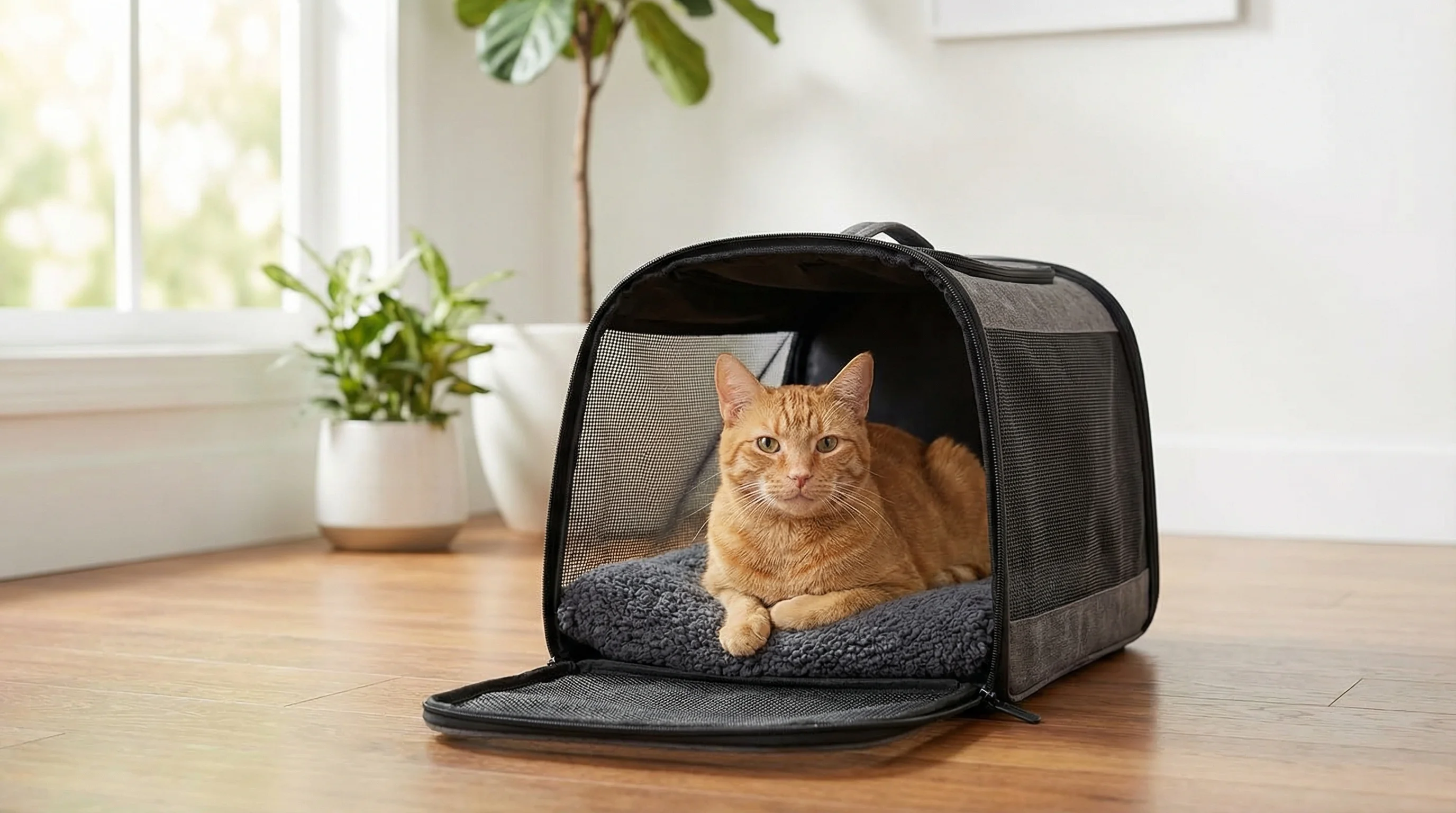
Your cat needs to visit the vet for their annual checkup. You reach for the carrier, and instantly your cat vanishes under the bed. Sound familiar?
The problem isn't just that cats dislike carriers—though most do. The real issue is that many cat owners are using carriers that make travel unnecessarily stressful for both pet and owner. A poorly designed carrier can turn a simple vet visit into an ordeal involving scratches, escape attempts, and a cat who associates the carrier with pure terror.
But here's the good news: choosing the right cat carrier can transform these experiences. With the proper carrier, many cats learn to tolerate—and some even enjoy—their travel space. The difference comes down to understanding what actually matters in carrier design and matching those features to your cat's specific needs.
After consulting with veterinary behaviorists, analyzing safety standards, and reviewing hundreds of carrier designs, we've identified the 5 critical factors that separate excellent carriers from merely adequate ones. This guide will walk you through everything you need to make an informed decision.
Why Your Carrier Choice Matters More Than You Think
Most cat owners view carriers as a necessary evil—something to grab from the closet a few times per year. But your carrier choice has significant impacts beyond convenience:
Safety during transport: A quality carrier protects your cat during sudden stops, minor accidents, or unexpected movements. Flimsy carriers can collapse or pop open, putting your cat at serious risk.
Veterinary access: Emergency situations require quick access to your cat. Top-loading carriers allow veterinarians to examine anxious cats without the struggle of extracting them from a front-opening carrier.
Long-term stress reduction: Cats who have positive carrier experiences from kittenhood develop better associations. The right carrier, introduced properly, becomes a safe den rather than a prison.
Your own comfort: Carrying an awkwardly designed 15-pound carrier with a squirming cat inside is physically taxing. Ergonomic design matters for your comfort and your cat's security.
Travel compliance: Airlines, trains, and hotels have specific carrier requirements. Choosing a versatile carrier now saves money and stress later.
The 5 Key Factors for Choosing a Cat Carrier
1. Carrier Type: Hard-Sided vs Soft-Sided vs Hybrid
The fundamental choice between carrier types affects everything else.
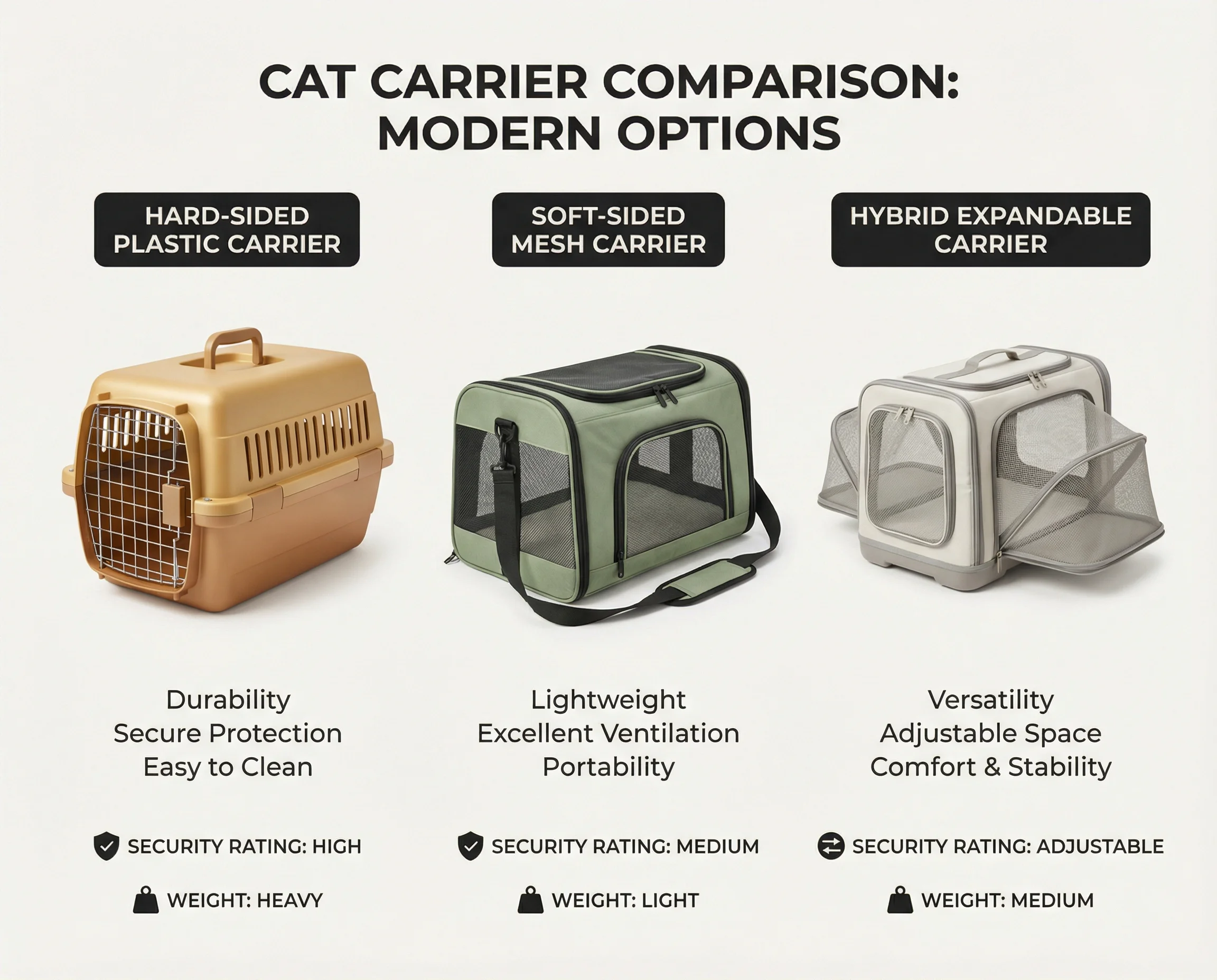
Hard-Sided Carriers (Plastic)
Hard-sided carriers use rigid plastic construction with metal door latches.
Advantages:
- Maximum protection during impacts or accidents
- Easy to clean with disinfectant after vet visits or accidents
- Airline-approved for cargo travel (check specific regulations)
- Durable for decades with proper care
- Stable structure won't collapse if something is placed on top
Disadvantages:
- Bulky storage when not in use
- Heavier to carry, especially for longer distances
- Can feel cold and clinical for anxious cats
- Limited ventilation compared to mesh designs
Best for: Regular vet visits, car travel, cats who need maximum security, multi-cat households, long-term durability.
Soft-Sided Carriers (Fabric/Mesh)
Soft-sided carriers use fabric exteriors with mesh panels for ventilation.
Advantages:
- Lightweight and easier to carry for extended periods
- Collapsible for compact storage
- More ventilation through mesh panels
- Often feels less intimidating to cats
- Available in airline-compliant sizes for cabin travel
Disadvantages:
- Less protective in accidents or impacts
- Harder to clean thoroughly (especially after accidents)
- Can develop odors over time if not aired out
- Fabric may fray or tear with aggressive scratching
- Some cats can claw through mesh panels
Best for: Air travel (under-seat cabin), short trips, calm cats, owners with limited storage, lightweight portability needs.
Hybrid/Expandable Carriers
Hybrid carriers combine elements of both designs or offer expandable features.
Advantages:
- Expandable models give cats more space when stationary
- Combine protective base with mesh ventilation
- Versatile for various travel scenarios
- Modern designs address weaknesses of traditional options
Disadvantages:
- Often more expensive than standard options
- Expandable mechanisms can malfunction over time
- May not meet all airline requirements
- Added complexity in design means more potential failure points
Best for: Frequent travelers, cats who need extra space during long waits, owners seeking versatility, extended travel periods.
2. Size Matters: Getting the Dimensions Right
Many cat owners choose carriers that are too small, forcing cats into cramped, uncomfortable positions during travel.
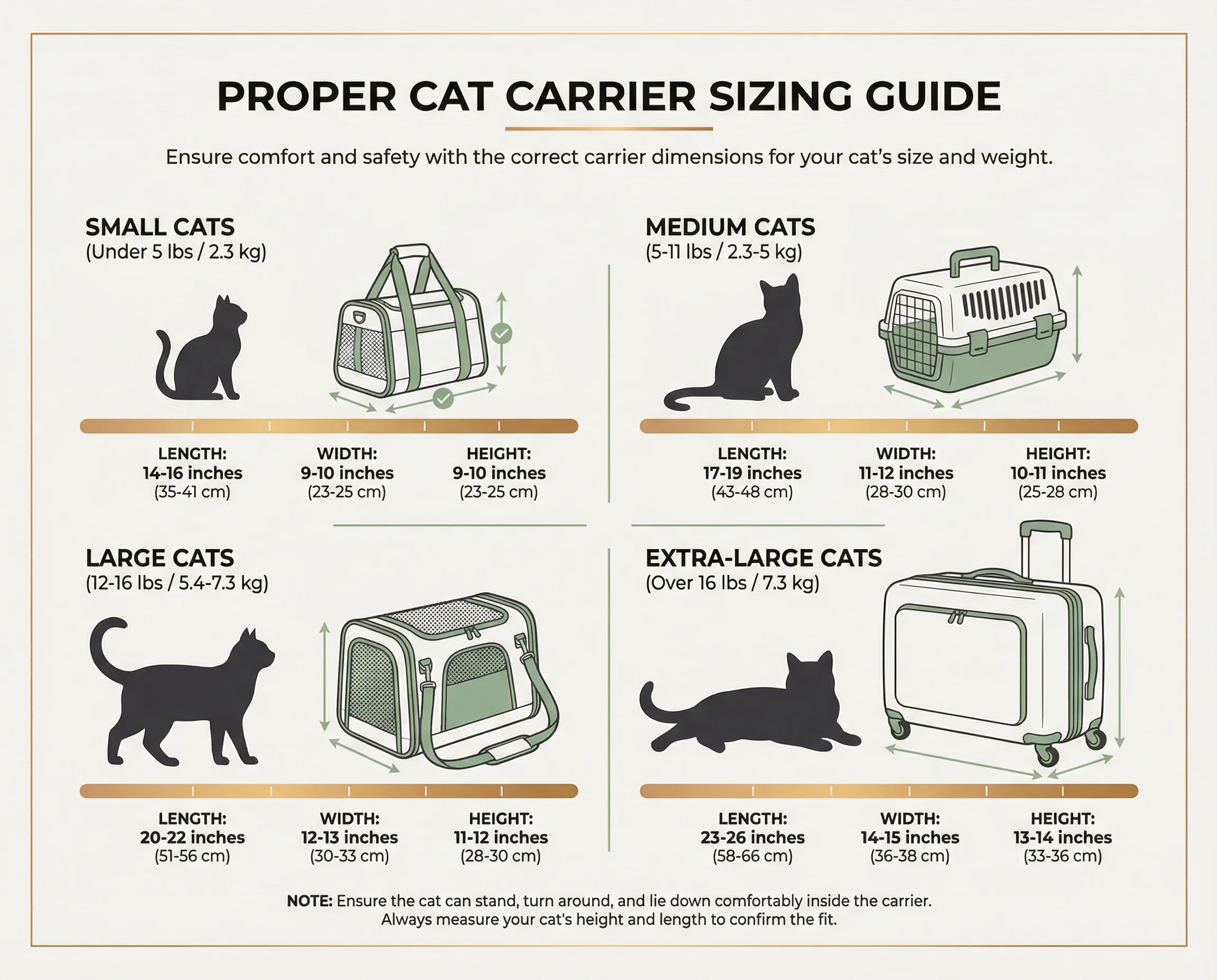
The Golden Rule for Carrier Sizing:
Your cat should be able to:
- Stand fully upright without their ears touching the top
- Turn around completely without difficulty
- Lie down in a natural position with legs extended
- Have 2-3 inches of clearance on all sides when standing
Measuring Your Cat for the Perfect Fit:
- Length: Measure from nose to base of tail (not tip of tail) while standing
- Height: Measure from floor to top of head while sitting naturally
- Width: Measure across the widest part of the body (usually shoulders)
Add these clearances:
- Length + 4 inches minimum
- Height + 3 inches minimum
- Width + 4 inches minimum
Standard Size Guidelines:
Small Carriers (up to 10 lbs / 4.5 kg)
- Interior: approximately 15" L × 10" W × 11" H
- Best for: Kittens, small adult cats (Singapura, Siamese)
Medium Carriers (10-15 lbs / 4.5-7 kg)
- Interior: approximately 18" L × 12" W × 12" H
- Best for: Average adult cats (most domestic shorthairs)
Large Carriers (15-20 lbs / 7-9 kg)
- Interior: approximately 24" L × 16" W × 14" H
- Best for: Large breeds (Maine Coon, Ragdoll, British Shorthair)
Extra-Large Carriers (20+ lbs / 9+ kg)
- Interior: approximately 28" L × 18" W × 16" H
- Best for: Very large breeds, multiple small cats, cats with mobility aids
When in doubt, size up. A carrier that's too large is inconvenient for you, but a carrier that's too small is distressing for your cat. Cats feel more secure with adequate space to adjust their position.
3. Safety Features That Actually Matter
Not all carriers are created equal when it comes to safety. These features can prevent disasters:
Secure Locking Mechanisms
The door latch is the most critical safety component.
What to look for:
- Dual-locking systems (two independent locks or a lock plus security clips)
- Metal latches over plastic (won't break under stress)
- Positive engagement (you should hear/feel a distinct "click")
- Cannot be opened from inside (test this—some cats figure out weak latches)
Red flags:
- Single plastic snap-lock designs
- Latches that feel loose or wobbly
- Doors that can be pushed open even when "latched"
- No secondary security option
Ventilation Without Vulnerability
Your cat needs airflow, but ventilation openings shouldn't compromise security.
Ideal ventilation design:
- Multiple ventilation points on at least 3 sides
- Openings small enough that paws/claws can't fit through
- Metal grating or reinforced mesh (not just plastic slats)
- Strategic placement allows airflow even when against a seat or wall
Structural Integrity
The carrier body should withstand impacts and pressure.
Test before buying:
- Press down on the top—it shouldn't flex significantly
- Push on the sides—walls should be rigid
- Check corners and seams for reinforcement
- Inspect the bottom—should support weight without sagging
Handle and Strap Durability
A broken handle mid-journey is dangerous for your cat and stressful for you.
Requirements:
- Handles should support at least 2-3× your cat's weight
- Stitching on fabric handles should be reinforced with multiple rows
- Shoulder straps (if included) should have padding
- Check for metal hardware on strap attachments (not just plastic clips)
Airline Safety Compliance
Even if you're not flying now, having an airline-compliant carrier keeps options open.
Key airline requirements:
- Leak-proof bottom
- Secure ventilation on opposite sides
- Fits under seat dimensions (typically max 18" L × 11" W × 11" H for under-seat)
- Carrier labeled with airline-specific approval (check individual airlines)
4. Entry Points: Top-Loading vs Front-Loading vs Both
How you get your cat into and out of the carrier significantly affects the experience.
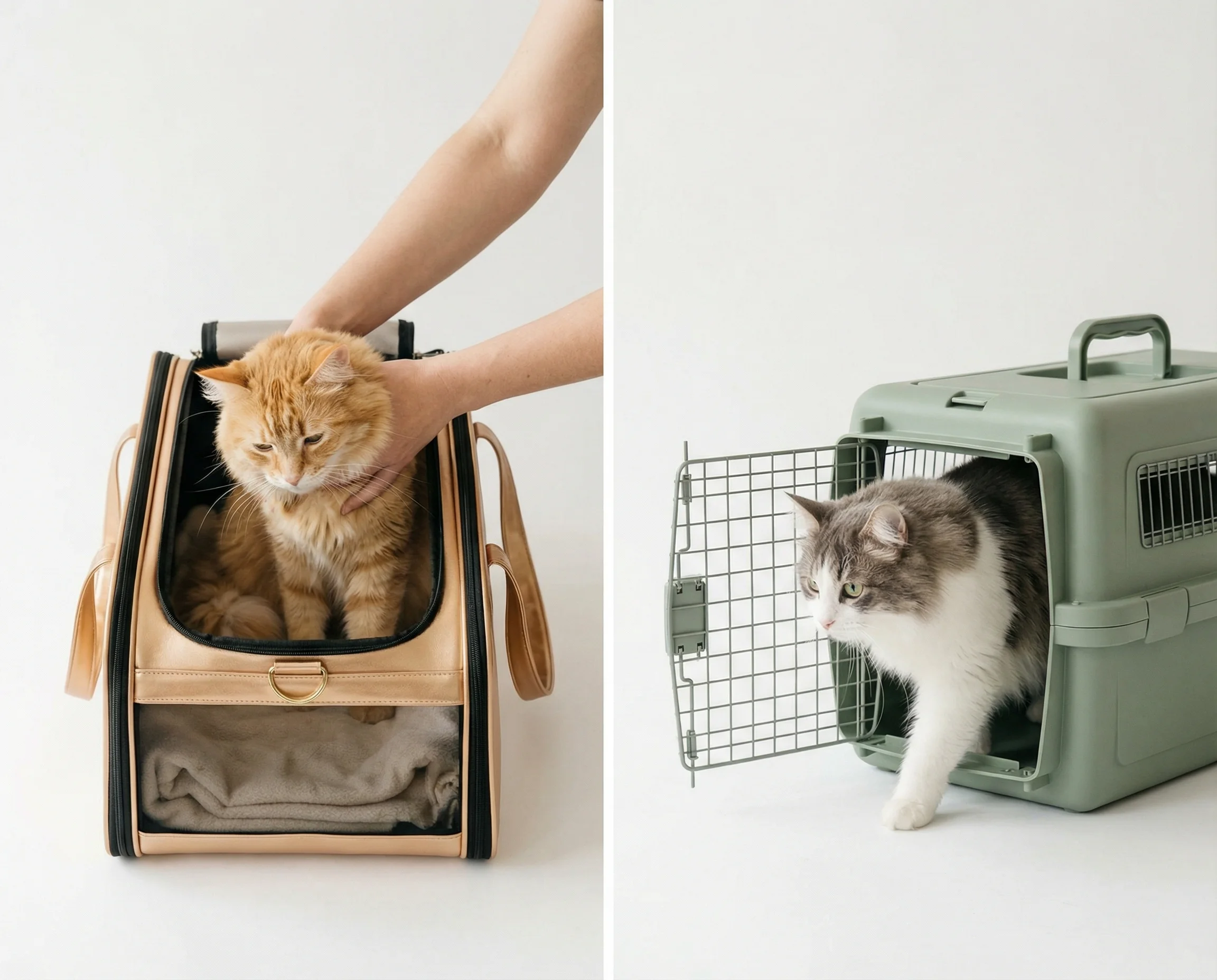
Top-Loading Carriers
Carriers with openings on the top panel.
Why veterinarians prefer them:
- Allows gentle lowering of cat into carrier (less resistance than forward entry)
- Anxious cats can be examined in the carrier bottom without full extraction
- Reduces stress for cats who refuse to exit voluntarily
- Easier to add bedding or arrange the interior before placing cat
Best practices:
- Look for top openings that cover at least 50% of the carrier top
- Ensure the top door has secure latches (cats can push up)
- Zipper openings should be sturdy and lockable
Front-Loading Carriers
Carriers with door openings on the front/narrow end.
Advantages:
- More intuitive for first-time carrier users
- Allows cats to walk in on their own (positive training opportunity)
- Easier for the cat to see out during travel
- Simpler mechanism (fewer parts to fail)
Challenges:
- Difficult to remove a reluctant cat (vet techs may have to tip the carrier)
- Anxious cats may resist forward entry more than being lowered into a top-loader
- Less access for in-carrier examinations
Dual-Entry Carriers (Top + Front)
Carriers with both top and front openings offer maximum versatility.
Why they're worth considering:
- Use top-loading for vet visits and reluctant cats
- Use front-loading for training and voluntary entry
- Flexibility for different situations
- Better access for cleaning all interior surfaces
Trade-offs:
- More openings = more potential failure points
- Typically more expensive
- Slightly heavier due to additional hardware
- Must ensure both entry points have secure latching
In our experience, dual-entry carriers provide the best long-term value if you plan to use the carrier regularly. The flexibility is worth the extra investment for most cat owners.
5. Comfort Features for Your Cat (and You)
The most secure, well-sized carrier is still inadequate if it's uncomfortable for extended use.
Interior Padding and Bedding
Cats need cushioning against the hard carrier floor.
What works best:
- Removable, washable fleece or microfiber pads
- Non-slip bottom surface (prevents sliding during transport)
- Absorbent materials for accidents (especially important for long trips)
- Adequate thickness (minimum 0.5 inches of padding)
Avoid:
- Loose towels or blankets that bunch up and create uneven surfaces
- Materials that retain odors (some cheap foam pads)
- Bedding that doesn't secure in place (slides around during movement)
Familiar Scent Integration
Cats navigate the world through scent. Your carrier should allow scent familiarity.
How to implement:
- Choose carriers with removable pads you can leave in cat's sleeping areas
- Use bedding that smells like home (cat's favorite blanket)
- Avoid heavily scented cleaning products—use enzyme cleaners instead
Privacy Options
Some cats feel more secure when they can't see their surroundings.
Privacy features to consider:
- Removable cover that blocks visual stimulation
- Panels that can be partially covered during transport
- Solid sides with ventilation holes (vs fully mesh sides)
- Option to create a "den" feeling with strategic covering
Ergonomics for the Human Carrier
You'll be carrying this, so your comfort matters too.
Look for:
- Padded handle grips
- Balanced weight distribution
- Shoulder strap option (essential for distances beyond parking lot to clinic)
- Lightweight construction without sacrificing safety
- Ability to attach to rolling luggage or use a separate carrier cart
Common Carrier Mistakes to Avoid
Even with the right carrier, these mistakes can undermine your success:
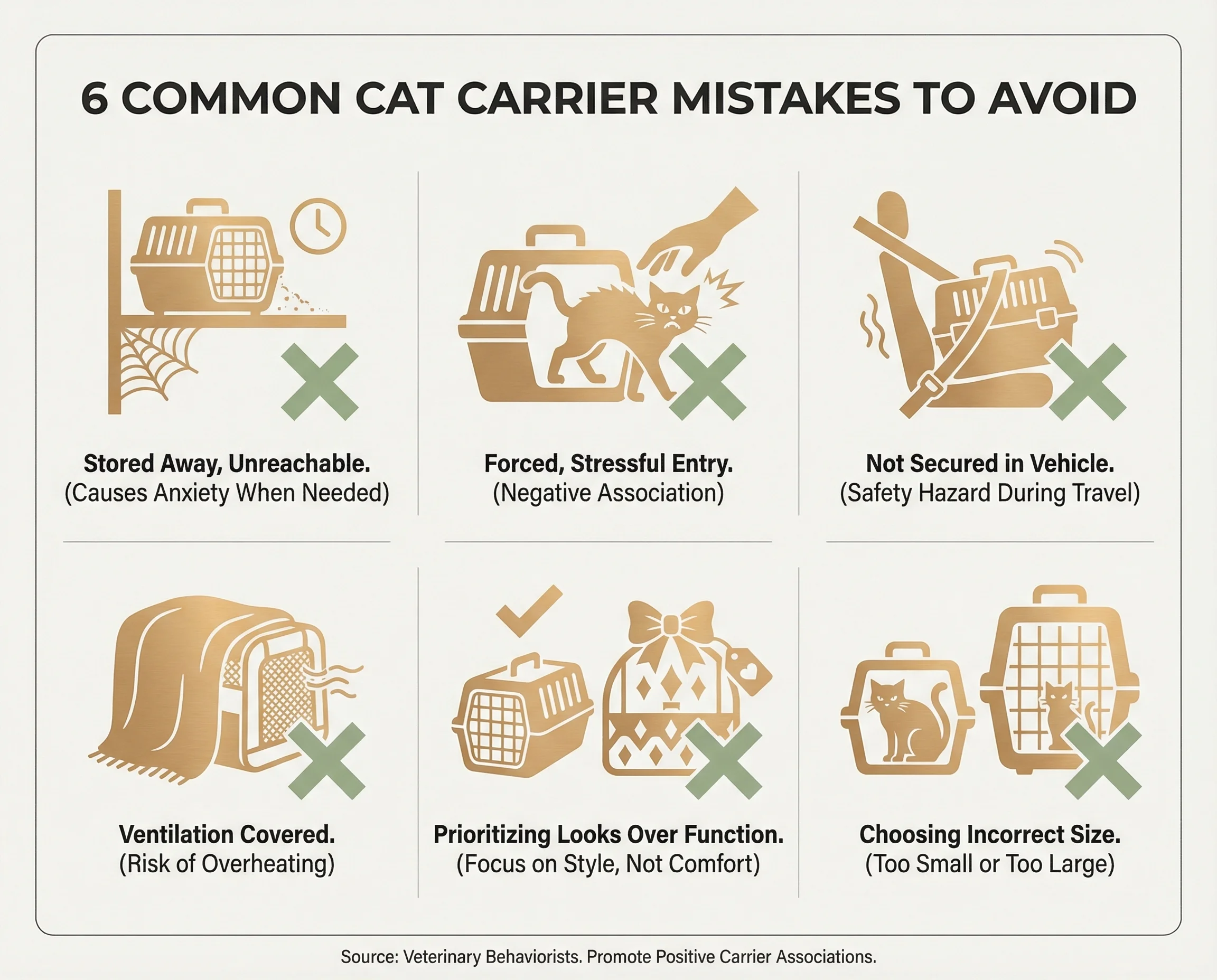
❌ Storing the carrier out of sight between uses
Cats associate carriers with stressful events if they only appear before vet visits.
Better approach: Keep the carrier accessible as a normal part of the home environment. Place it in a living area with the door open, add comfortable bedding, and occasionally place treats inside. Some cats will voluntarily nap in carriers when they're not associated with travel.
❌ Using the carrier only for negative experiences
If the carrier only appears before vet visits or medication, your cat will learn to avoid it.
Better approach: Occasionally place your cat in the carrier for positive experiences—a car ride to nowhere stressful, a room-to-room move with a treat reward at the end, or simply sitting together calmly while you read nearby.
❌ Forcing your cat into the carrier while they're stressed
Wrestling a terrified cat into a front-loading carrier creates trauma and makes future attempts worse.
Better approach: Use treats, toys, or feeding schedules to encourage voluntary entry. Top-loading carriers allow gentle placement when voluntary entry isn't possible. Start carrier training well before you need to travel.
❌ Forgetting to secure the carrier in the vehicle
A loose carrier becomes a projectile during sudden stops or accidents.
Better approach: Always use a seatbelt to secure the carrier, place it on the floor behind the front seat (safest position), or use a specialized carrier restraint system. Never place the carrier in the front seat where airbag deployment can cause injury.
❌ Covering all ventilation during cold weather
While you want to protect your cat from drafts, they still need adequate airflow.
Better approach: Use a breathable cover that allows ventilation while blocking wind. Never fully enclose a carrier with non-breathable materials. Brief outdoor transfers are fine; extended time in vehicles requires careful ventilation management.
❌ Choosing based solely on aesthetics
Fashionable carriers are appealing, but function must come first.
Better approach: Prioritize safety, size, and durability. Many modern carriers are both functional and attractive—but if you must compromise, choose the carrier that keeps your cat safer and more comfortable, even if it's less stylish.
Special Considerations for Different Travel Scenarios
Vet Visits (Short Duration, High Stress)
Recommended carrier type: Hard-sided with top loading
Key features:
- Easy to disinfect after exposure to other animals
- Top-loading allows in-carrier examinations
- Sturdy construction for waiting room safety
- Removable pad that can be washed after accidents
Pro tip: Ask your vet if they have a "cat-friendly practice" certification. These practices specifically design their protocols to reduce cat stress, including carrier handling procedures.
Car Travel (Variable Duration)
Recommended carrier type: Hard-sided or hybrid with ample ventilation
Key features:
- Secure seatbelt attachment points
- Excellent ventilation for temperature control
- Size appropriate for cat to reposition during longer drives
- Access to water for trips over 2 hours
Pro tip: Never place a carrier in direct sunlight. Cars heat up rapidly, and cats in carriers can't escape heat stress. Use sunshades and ensure climate control air reaches the carrier.
Air Travel (Extended Duration, Multiple Regulations)
Recommended carrier type: Soft-sided airline-compliant for cabin; hard-sided IATA-approved for cargo
Cabin travel requirements:
- Must fit completely under the seat in front of you
- Maximum dimensions vary by airline (typically 18" × 11" × 11")
- Soft-sided carriers easier to compress slightly if needed
- Cat must be able to stand and turn around inside
Cargo travel requirements:
- Must meet IATA (International Air Transport Association) standards
- Hard-sided with metal door and hardware
- Specific ventilation requirements (openings on opposite sides)
- Size must accommodate food/water dishes
- "Live Animal" labels and documentation
Critical preparation:
- Book well in advance—airlines limit pets per flight
- Acclimate your cat to the carrier for several weeks before travel
- Check specific airline policies (they vary significantly)
- Consider a direct flight to minimize stress and transition time
Multi-Cat Transport
Recommended approach: Separate carriers for each cat (strongly preferred)
Why separate carriers are better:
- Reduces stress and potential conflict in confined space
- Allows individual attention if one cat has an emergency
- Prevents injury if cats panic and fight
- Easier to control during loading and unloading
If you must use a shared carrier:
- Choose extra-large size (double the space needed for one cat)
- Only use for bonded cats with no history of conflict
- Include separate comfort items for each cat
- Monitor constantly during transport
- Have a plan to separate them quickly if conflict arises
Carrier Training: Setting Up Long-Term Success
Even the perfect carrier is stressful if your cat hasn't been properly introduced to it.
The 4-Week Carrier Acclimation Program:
Week 1: Introduction and Exploration
- Place carrier in main living area with door removed or secured open
- Add familiar bedding and a favorite toy inside
- Allow cat to investigate on their own terms
- Do not force interaction—ignore the carrier yourself
Week 2: Positive Associations
- Begin feeding meals near (not inside) the carrier
- Place high-value treats just inside the entrance
- Move feeding location gradually deeper into carrier over several days
- Praise calmly when cat voluntarily enters
Week 3: Comfortable Confinement
- Once cat enters freely for treats, begin closing door briefly (5-10 seconds)
- Immediately reward with treat after opening door
- Gradually extend door-closed duration over multiple sessions
- Never force this step—go at cat's pace
Week 4: Movement and Travel
- Pick up carrier with cat inside for just a few seconds, then set down and release
- Gradually increase to carrying around the house
- Progress to brief car rides (just to the end of the driveway and back)
- Always end sessions on a positive note with treats and praise
Cats who complete gradual carrier training show significantly lower stress indicators during travel compared to cats forced into carriers without preparation. The time investment pays off dramatically.
What to Do If Your Cat Still Refuses the Carrier
If you've tried proper introduction and your cat still resists the carrier, consider these factors:
Medical assessment: Some cats avoid carriers because they associate them with pain from a previous injury during transport or veterinary examination. A veterinary behaviorist can assess whether anxiety medication or pheromone treatments might help.
Carrier design mismatch: Your cat might find the current carrier genuinely uncomfortable. Try a different style—some cats who hate front-loading carriers accept top-loading ones readily.
Scent contamination: If a previous cat used the carrier, or if it was cleaned with harsh chemicals, lingering scents may trigger avoidance. Consider starting fresh with a new carrier and enzyme-based cleaners only.
Alternative approaches: For cats with severe carrier phobia, temporary solutions include:
- Pillowcase transport for very short trips (not safe for extended travel)
- Sedation prescribed by your veterinarian (discuss risks and benefits)
- Mobile veterinary services that come to your home
- Gradual desensitization working with a veterinary behaviorist
Final Thoughts
Choosing a cat carrier isn't about finding the most expensive or trendy option. It's about matching your cat's specific needs with safety features, appropriate sizing, and design elements that reduce stress for both of you.
The key considerations to remember:
- Prioritize safety over aesthetics—secure latches, structural integrity, and proper ventilation are non-negotiable
- Size appropriately to allow natural movement and positioning
- Choose entry points based on your cat's temperament and your typical use cases
- Invest in quality if you'll use the carrier regularly—durability pays off over years of use
Every cat is unique. Some will adapt to virtually any carrier with proper introduction, while others have strong preferences for specific designs. Pay attention to your cat's signals, be patient during acclimation, and remember that the time invested in carrier training yields years of reduced stress.
The best cat carrier isn't the one with the most features—it's the one that keeps your cat safe and as comfortable as possible during necessary travel. When you see your cat voluntarily enter their carrier, curl up on familiar bedding, and travel without signs of extreme distress, you'll know you've made the right choice.