50 Human Foods Dogs Can & Cannot Eat: The Complete Guide
Discover which human foods are safe for dogs and which are toxic. Our comprehensive guide covers 50 common foods with portion guidelines, health benefits, and warning signs to watch for.

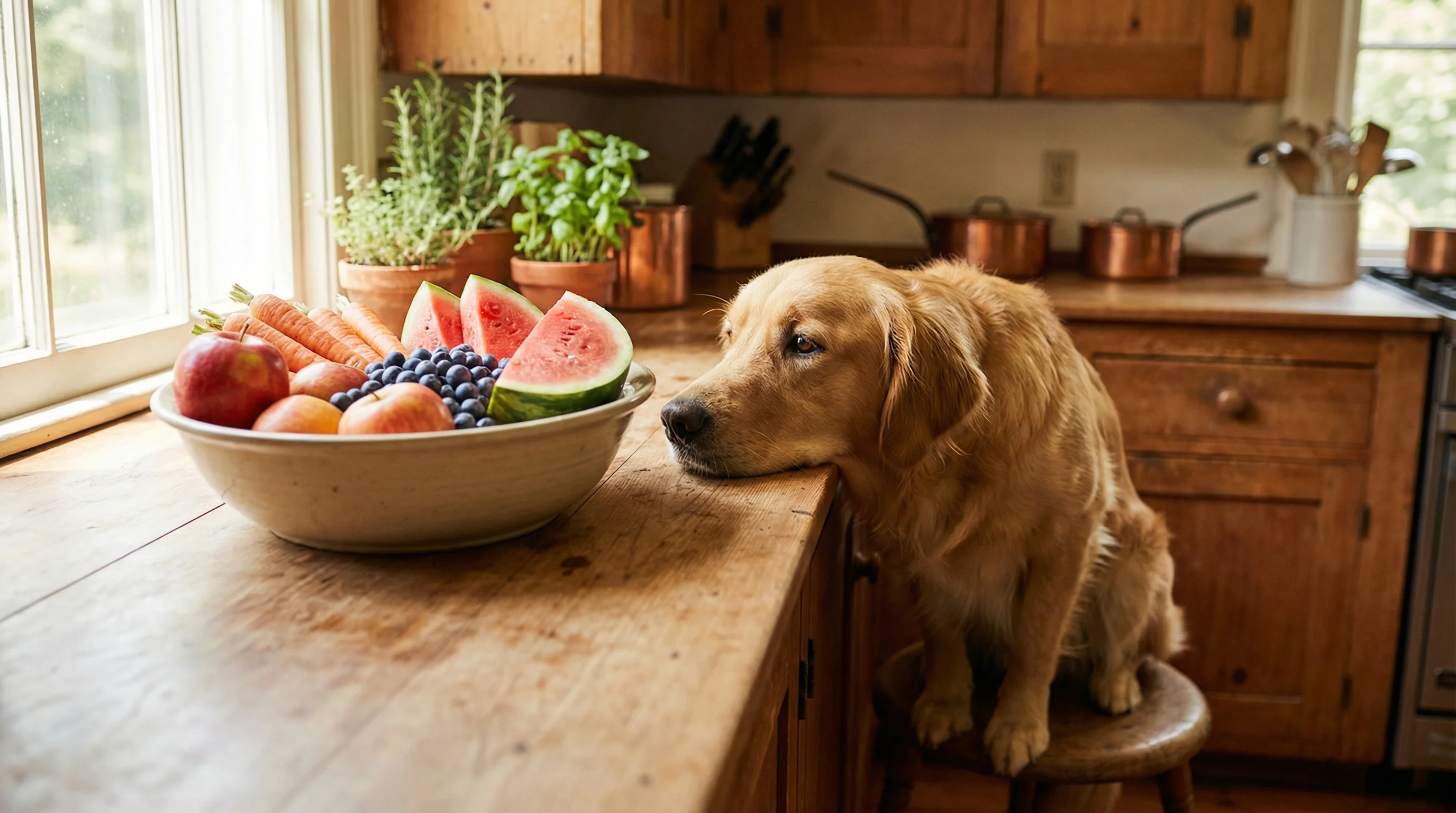
Your dog is staring at you with those irresistible eyes while you eat dinner. You want to share, but a nagging question stops you: Is this food safe for my dog?
It's a question every dog owner asks—and getting it wrong can have serious consequences. While some human foods make excellent treats and can even boost your dog's health, others are genuinely toxic and can cause organ damage or worse.
This guide covers 50 common human foods, organized by safety category. We'll explain exactly why each food is safe or dangerous, provide portion guidelines for safe foods, and help you recognize the warning signs if your dog eats something they shouldn't.
Quick Reference: Foods at a Glance
Before diving into details, here's a quick visual reference:
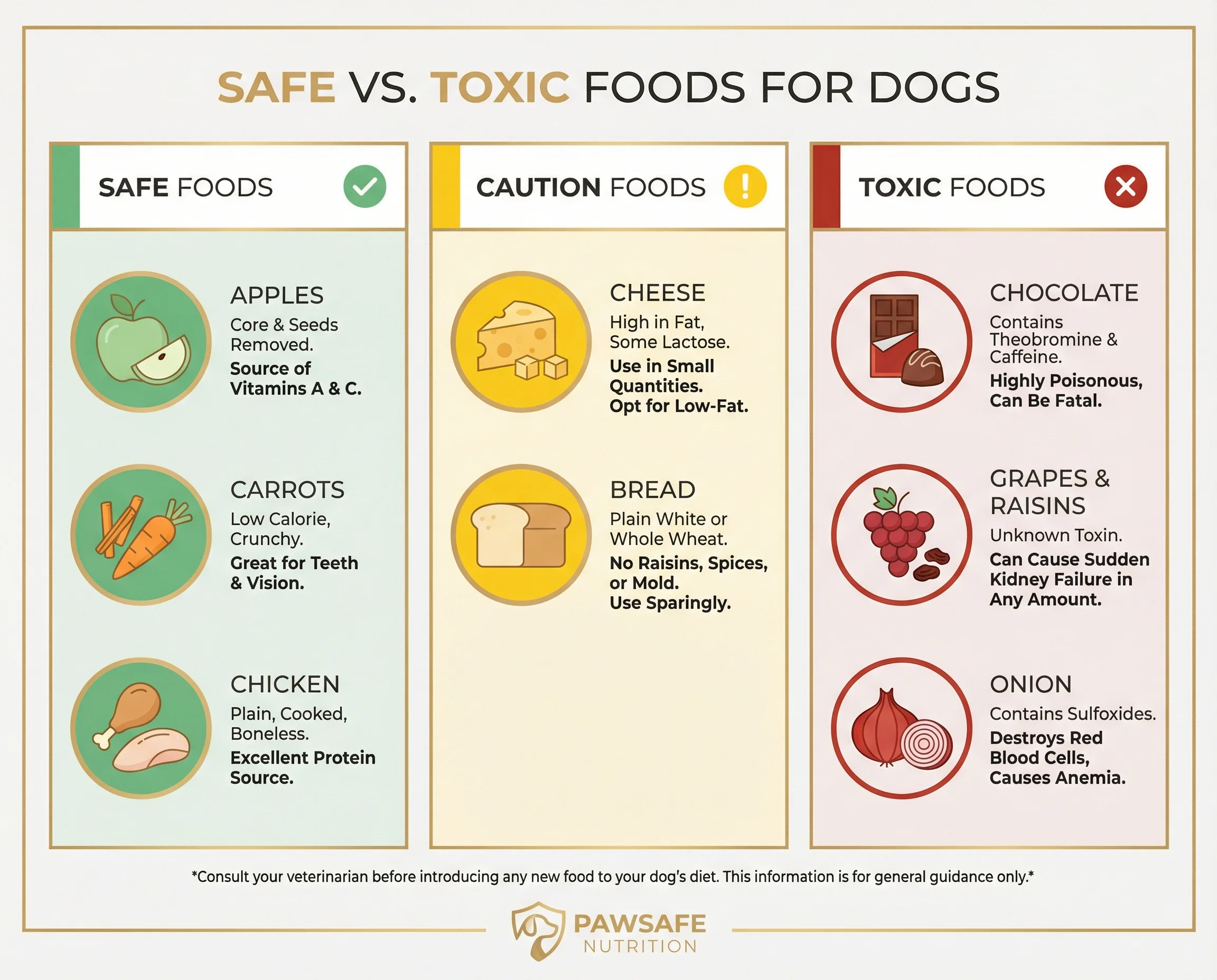
Green Light (Safe): Apples, bananas, blueberries, carrots, chicken, rice, sweet potatoes, watermelon, peas, green beans, salmon, eggs, peanut butter (xylitol-free), mango, pears
Yellow Light (Caution): Cheese, bread, spinach, corn kernels, dairy, oranges, raspberries
Red Light (Toxic): Chocolate, grapes, raisins, onions, garlic, xylitol, macadamia nuts, avocado, raw potatoes, wild mushrooms
Part 1: Safe Foods for Dogs
These foods are generally safe for healthy adult dogs when given in moderation. Always introduce new foods gradually and watch for individual sensitivities.
Fruits Dogs Can Eat
Apples
Safe: Yes, in moderation
Apples are an excellent low-calorie treat packed with vitamins A and C, plus fiber that supports digestive health. The crunchy texture also helps clean your dog's teeth.
How to serve: Remove the core and seeds completely—apple seeds contain amygdalin, which releases cyanide when digested. Slice into bite-sized pieces appropriate for your dog's size.
Portion guide: 1-2 slices for small dogs, 2-4 slices for large dogs, as an occasional treat.
Bananas
Safe: Yes, in moderation
Bananas provide potassium, vitamin B6, vitamin C, and fiber. They're soft and easy to digest, making them ideal for dogs with sensitive stomachs.
How to serve: Peel and slice into rounds or mash into your dog's food. Freeze banana slices for a refreshing summer treat.
Portion guide: Limit to a few slices due to high sugar content. Half a banana maximum for large dogs, 2-3 small pieces for small dogs.
Bananas are high in natural sugar. While safe in moderation, excessive amounts can contribute to weight gain and aren't suitable for diabetic dogs.
Blueberries
Safe: Yes, excellent choice
Blueberries are a superfood for dogs, packed with antioxidants that help fight free radicals and support brain health. Studies suggest they may help prevent cognitive decline in senior dogs.
How to serve: Fresh or frozen, whole for medium/large dogs or mashed for small dogs to prevent choking.
Portion guide: 8-10 berries for large dogs, 2-4 for small dogs.
Watermelon
Safe: Yes, seedless flesh only
Watermelon is 92% water, making it a hydrating treat for hot days. It contains vitamins A, B6, and C, plus lycopene—an antioxidant that may help prevent certain diseases.
How to serve: Remove all seeds and the rind. Seeds can cause intestinal blockage, and the rind is difficult to digest and may cause GI upset.
Portion guide: A few small cubes as an occasional treat.
Strawberries
Safe: Yes, in moderation
Strawberries contain fiber, vitamin C, and an enzyme that can help whiten your dog's teeth. They're also relatively low in sugar compared to other fruits.
How to serve: Remove the stem and leaves. Cut into small pieces or mash for smaller dogs.
Portion guide: 1 strawberry for small dogs, 2-3 for larger dogs.
Cantaloupe
Safe: Yes, in moderation
Cantaloupe provides beta-carotene, vitamins A and C, and plenty of water content. It's low in calories but high in natural sugar.
How to serve: Remove seeds and rind completely. Cut into small, manageable chunks.
Portion guide: 1-2 small cubes occasionally due to sugar content.
Mango
Safe: Yes, flesh only
Mango is packed with vitamins A, B6, C, and E, making it a nutrient-dense treat. It's also high in fiber and natural sweetness that dogs love.
How to serve: Remove the skin and pit completely. The pit contains small amounts of cyanide and is a serious choking hazard. Cut the flesh into small cubes.
Portion guide: 1-2 small cubes for small dogs, a few cubes for large dogs. Limit due to high sugar content.
Pears
Safe: Yes, in moderation
Pears provide copper, vitamins C and K, and fiber. They're a good source of hydration due to high water content.
How to serve: Remove the stem, leaves, seeds, and core—pear seeds contain cyanide compounds like apple seeds. Cut into bite-sized pieces.
Portion guide: 1-2 small slices for small dogs, 2-4 for large dogs.
Raspberries
Safe: Yes, in moderation
Raspberries contain antioxidants, fiber, manganese, and vitamin C. They're particularly beneficial for senior dogs due to anti-inflammatory properties that may help with joint pain.
How to serve: Fresh or frozen, whole or mashed depending on dog size.
Portion guide: Less than 1 cup at a time. Raspberries contain small amounts of naturally occurring xylitol, so keep portions small.
Oranges
Safe: Yes, flesh only in small amounts
Oranges provide vitamin C, potassium, and fiber. Most dogs can safely eat orange flesh, though many dislike the citrus smell.
How to serve: Remove all peel, pith (white part), and seeds. The peel contains oils that can cause digestive upset.
Portion guide: 1-2 segments for large dogs, half a segment for small dogs. The high acidity can cause stomach upset in some dogs.
Vegetables Dogs Can Eat
Carrots
Safe: Yes, excellent choice
Carrots are a veterinarian-favorite treat. They're low in calories, high in fiber and beta-carotene (vitamin A), and the crunchy texture supports dental health by scraping plaque off teeth.
How to serve: Raw or cooked. Cut into appropriate sizes—baby carrots work well for medium dogs, but should be cut smaller for toy breeds to prevent choking.
Portion guide: 1-2 baby carrots for small dogs, 2-4 for large dogs.
Green Beans
Safe: Yes, excellent choice
Green beans are packed with fiber, vitamins K and C, and manganese—all with minimal calories. They're often recommended as a diet food for overweight dogs.
How to serve: Fresh, frozen, or canned (choose low-sodium or no-salt-added canned varieties). Cooked or raw, cut into bite-sized pieces.
Portion guide: A handful of beans makes a satisfying, low-calorie snack.
Sweet Potatoes
Safe: Yes, cooked only
Sweet potatoes are rich in dietary fiber, vitamin A, vitamin C, and vitamin B6. They're gentle on the digestive system and often recommended for dogs with stomach sensitivities.
How to serve: Always cook thoroughly—raw sweet potato is difficult to digest and can cause intestinal blockage. Bake, boil, or steam without added seasonings. Remove the skin for easier digestion.
Portion guide: 1-2 tablespoons for small dogs, up to 1/4 cup for large dogs.
Never feed your dog raw sweet potato. It's hard to chew, difficult to digest, and poses a choking hazard. Always cook it completely.
Pumpkin
Safe: Yes, cooked/canned pure pumpkin
Plain pumpkin is a digestive superfood for dogs. The high fiber content helps with both constipation and diarrhea by regulating digestive function. It's also low in calories and high in vitamins.
How to serve: Use 100% pure canned pumpkin (NOT pumpkin pie filling, which contains harmful spices and sugar) or cook fresh pumpkin without seasonings.
Portion guide: 1 teaspoon for small dogs, 1-2 tablespoons for large dogs.
Broccoli
Safe: Yes, in small amounts
Broccoli contains fiber, vitamin C, and is low in fat. However, it also contains isothiocyanates, which can cause gastric irritation in large amounts.
How to serve: Steamed or raw, cut into small florets. Avoid seasonings or butter.
Portion guide: Should comprise less than 10% of your dog's daily diet. A few small florets as an occasional treat.
Cucumbers
Safe: Yes, excellent low-calorie option
Cucumbers are particularly good for overweight dogs—they contain minimal calories, fat, or carbohydrates while providing hydration and a satisfying crunch.
How to serve: Slice into rounds or sticks. No need to peel if organic; peel conventional cucumbers to remove potential pesticide residue.
Portion guide: Several slices make a refreshing, guilt-free treat.
Peas
Safe: Yes, fresh or frozen
Green peas, snow peas, and sugar snap peas are all safe for dogs. They're packed with vitamins A, K, and B, plus minerals like iron, zinc, and potassium. Many commercial dog foods include peas as an ingredient.
How to serve: Fresh, frozen, or thawed. Avoid canned peas due to high sodium content.
Portion guide: A small handful as a treat. Avoid giving peas to dogs with kidney problems, as they contain purines.
Celery
Safe: Yes, excellent choice
Celery is extremely low in calories and high in water content, making it ideal for overweight dogs. It contains vitamins A, C, and K, plus it can help freshen your dog's breath.
How to serve: Cut into small, bite-sized pieces to prevent choking. The strings can be difficult for some dogs to chew.
Portion guide: A few small pieces as a crunchy, hydrating treat.
Zucchini
Safe: Yes, excellent low-calorie option
Zucchini is low in calories and fat while providing fiber, vitamins, and minerals. It's gentle on the digestive system and well-tolerated by most dogs.
How to serve: Raw or cooked, sliced into appropriate sizes for your dog. No seasonings or oil needed.
Portion guide: A few slices as a healthy, low-calorie treat.
Spinach
Safe: Yes, in small amounts
Spinach contains iron, antioxidants, and vitamins A, B, C, and K. However, it's high in oxalic acid, which can interfere with calcium absorption and may contribute to kidney problems in large amounts.
How to serve: Small amounts of fresh or steamed spinach, plain without seasonings.
Portion guide: Occasional small portions only. Not recommended for dogs with kidney issues.
Proteins Dogs Can Eat
Chicken
Safe: Yes, cooked and plain
Lean chicken is an excellent protein source and is gentle enough that it's often recommended for dogs with upset stomachs. It's a primary ingredient in many commercial dog foods.
How to serve: Thoroughly cooked without skin, bones, seasonings, or oils. Boiled or baked chicken breast is ideal. Never feed raw chicken due to salmonella risk.
Portion guide: As a treat, a few small pieces. As a meal supplement, follow your vet's guidance based on your dog's size and dietary needs.
Never feed cooked chicken bones to dogs. They splinter into sharp fragments that can puncture the digestive tract, causing life-threatening injuries.
Turkey
Safe: Yes, cooked and plain
Turkey is lean, high in protein, and easily digestible. It's commonly used in commercial dog foods and makes a healthy treat.
How to serve: Plain, thoroughly cooked turkey meat only. Remove all skin (high in fat) and bones. Avoid processed turkey products like deli meat, which contain high sodium and preservatives.
Portion guide: Similar to chicken—small pieces as treats.
Salmon
Safe: Yes, cooked only
Salmon is rich in omega-3 fatty acids, which support skin health, coat shine, and immune function. It may also help reduce inflammation in dogs with arthritis.
How to serve: Fully cooked, boneless, and unseasoned. Never feed raw or undercooked salmon—it can contain parasites that cause "salmon poisoning disease," which is often fatal without treatment.
Portion guide: A small portion (1-2 ounces) once or twice per week.
Eggs
Safe: Yes, cooked
Eggs are a complete protein source containing nearly every essential amino acid, plus fatty acids, vitamins, and minerals. They can help settle upset stomachs and add shine to coats.
How to serve: Fully cooked—scrambled, hard-boiled, or poached without butter, oil, or seasonings. Raw eggs carry salmonella risk and contain avidin, which interferes with biotin absorption.
Portion guide: 1 egg per day for large dogs, half an egg for small dogs, a few times per week.
Shrimp
Safe: Yes, cooked and plain
Shrimp is low in fat, calories, and carbohydrates while being high in protein. It also contains vitamin B12, niacin, phosphorus, and antioxidants.
How to serve: Fully cooked, shells removed, and plain without butter, garlic, or seasonings. Raw shellfish can contain harmful bacteria and parasites.
Portion guide: 1-2 shrimp for small dogs, a few shrimp for large dogs as an occasional treat. High in cholesterol, so moderation is key.
Lean Beef
Safe: Yes, cooked and plain
Lean beef provides high-quality protein, iron, zinc, and B vitamins. It's a common ingredient in commercial dog foods and makes a satisfying treat.
How to serve: Fully cooked, plain, and trimmed of excess fat. Ground beef should be cooked thoroughly with fat drained. Avoid seasonings, especially onion and garlic.
Portion guide: Small pieces as treats, or as directed by your vet for meal supplementation.
Pork
Safe: Yes, cooked and plain
Plain, cooked pork is safe for dogs in moderation. It's a good source of protein and contains amino acids and B vitamins.
How to serve: Fully cooked, plain, without bones, seasonings, or sauces. Avoid processed pork products like bacon, ham, and sausage—they're too high in salt and fat.
Portion guide: Small pieces of lean pork as occasional treats.
Never feed raw pork to dogs. It can contain parasites, particularly Trichinella spiralis larvae, which cause trichinosis.
Grains & Starches Dogs Can Eat
Rice
Safe: Yes, especially white rice
Plain white rice is easily digestible and commonly recommended for dogs recovering from digestive upset. Brown rice is also safe but harder to digest.
How to serve: Plain, fully cooked without salt, butter, or seasonings.
Portion guide: As a dietary supplement, mix a small amount with your dog's regular food. For upset stomachs, bland rice with boiled chicken is a common veterinary recommendation.
Oatmeal
Safe: Yes, plain and cooked
Oatmeal provides soluble fiber that can help regulate digestion, especially in senior dogs with irregular bowel issues. It's also a good alternative carbohydrate for dogs with wheat sensitivities.
How to serve: Cooked in water (not milk), served plain without sugar, maple syrup, or flavored additives. Avoid instant oatmeal packets, which often contain xylitol or excess sugar.
Portion guide: 1 tablespoon for small dogs, up to 1/4 cup for large dogs.
Quinoa
Safe: Yes, cooked and plain
Quinoa is a nutritious alternative to corn, wheat, and soy—common allergens in dog food. It's high in protein and contains all nine essential amino acids.
How to serve: Thoroughly cooked and rinsed to remove saponin (a natural coating that can irritate the digestive system). Serve plain.
Portion guide: A small amount mixed into regular food.
Other Safe Foods
Peanut Butter
Safe: Yes, with important caveats
Peanut butter is a beloved dog treat and great for hiding medication or stuffing puzzle toys. It's high in protein, healthy fats, and vitamins B and E.
Critical warning: Check the ingredients list carefully. Many peanut butter brands now contain xylitol, an artificial sweetener that is extremely toxic to dogs. Even small amounts can cause hypoglycemia, seizures, liver failure, and death.
How to serve: Choose natural peanut butter with only peanuts (and salt, if anything) as ingredients. No xylitol, no added sugars, no artificial sweeteners.
Portion guide: 1/2 teaspoon for small dogs, 1 tablespoon for large dogs—peanut butter is calorie-dense.
Always check peanut butter labels for xylitol (also called birch sugar or wood sugar). Xylitol is deadly to dogs, and it's increasingly common in "reduced sugar" peanut butter products.
Cheese
Safe: Yes, in moderation
Cheese is high in protein and calcium, and most dogs love it. It's useful for hiding pills or as a high-value training treat.
How to serve: Small cubes or shreds of low-fat cheese varieties like mozzarella or cottage cheese. Avoid high-fat cheeses and blue cheese (which contains substances that can be toxic).
Portion guide: Small pieces as occasional treats. Many dogs are lactose intolerant, so watch for digestive upset.
Plain Popcorn
Safe: Yes, air-popped only
Plain, air-popped popcorn is a low-calorie treat that contains fiber, B vitamins, and minerals. Dogs often enjoy the crunchy texture.
How to serve: Air-popped only, without salt, butter, oil, or seasonings. Remove unpopped kernels, which can be a choking hazard or cause tooth damage.
Portion guide: A small handful as an occasional treat.
Bread
Safe: Yes, plain in moderation
Plain white or wheat bread is safe for dogs in small amounts. It provides no significant nutritional value but isn't harmful.
How to serve: Small pieces of plain bread. Avoid bread with raisins, garlic, nuts, or xylitol-containing sweeteners.
Portion guide: Occasional small piece only—bread is essentially empty calories.
Part 2: Toxic Foods for Dogs
These foods are dangerous and should never be given to dogs. If your dog consumes any of these, contact your veterinarian or the ASPCA Animal Poison Control Center (888-426-4435) immediately.
Highly Toxic Foods
Chocolate
Toxic: Yes, potentially fatal
Chocolate contains theobromine and caffeine, which dogs metabolize much more slowly than humans. Toxicity depends on the type of chocolate and your dog's size.
Danger level by chocolate type:
- White chocolate: Lowest risk (minimal theobromine)
- Milk chocolate: Moderate risk (44-58 mg theobromine per ounce)
- Dark chocolate: High risk (130-450 mg per ounce)
- Baking chocolate: Extremely dangerous (390-450 mg per ounce)
Symptoms: Vomiting, diarrhea, rapid breathing, increased heart rate, seizures, muscle tremors, heart failure.
Timeline: Symptoms typically appear within 6-12 hours and can last 72+ hours.
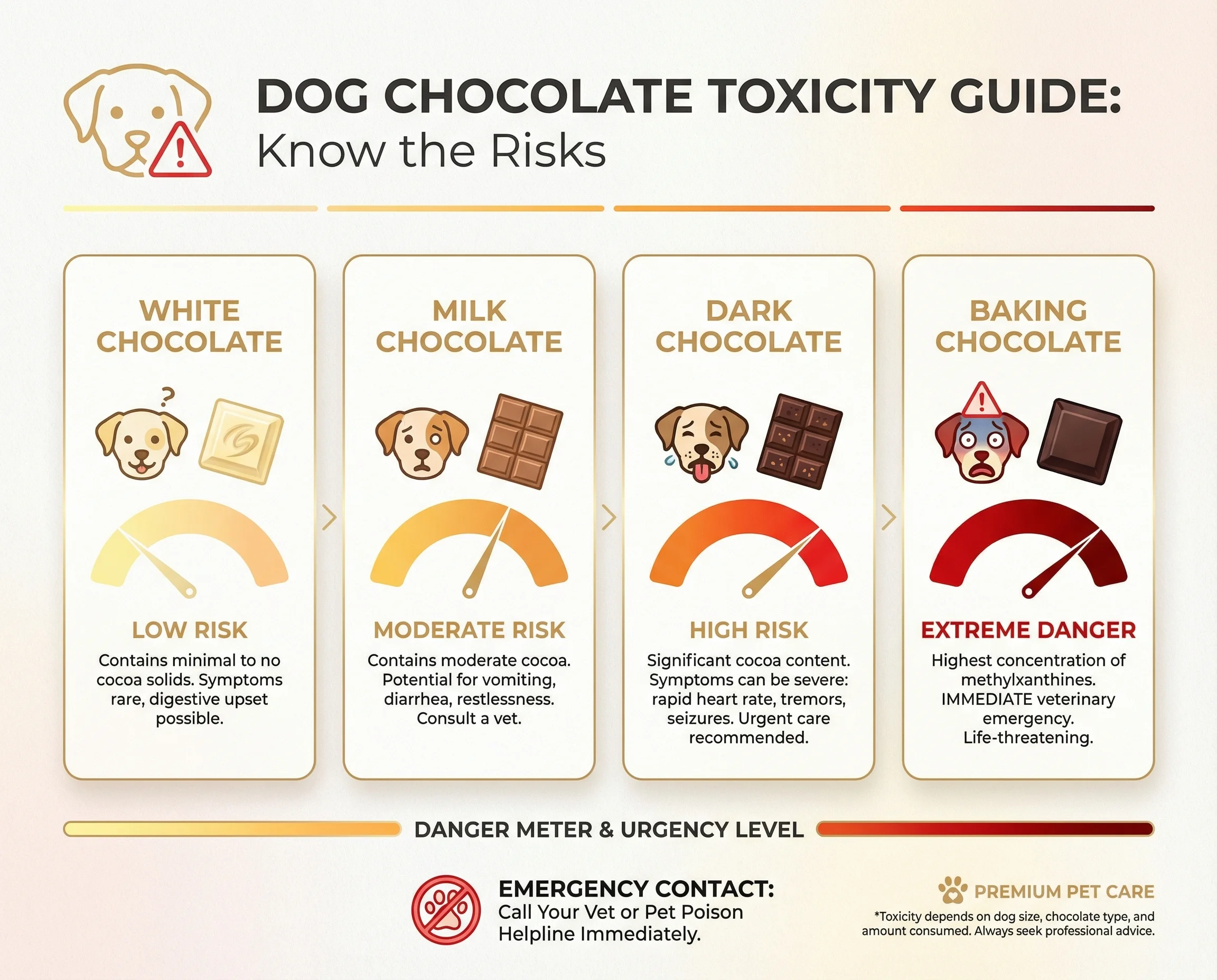
A small amount of dark or baking chocolate can be fatal to a small dog. If your dog eats any chocolate, calculate the amount and call your vet immediately—don't wait for symptoms.
Grapes and Raisins
Toxic: Yes, potentially fatal
Grapes and raisins can cause sudden, severe kidney failure in dogs. The exact toxic substance hasn't been identified, which makes this danger particularly unpredictable.
Critical fact: There is no safe amount. Some dogs have died from eating just a few grapes, while others have eaten larger amounts without obvious effects. The toxicity appears to be individual and unpredictable.
Symptoms: Vomiting (often within hours), lethargy, loss of appetite, abdominal pain, decreased urination, kidney failure.
Timeline: Kidney failure can develop within 24-72 hours.
Onions and Garlic (All Allium Family)
Toxic: Yes
All members of the allium family—onions, garlic, leeks, chives, shallots, and scallions—are toxic to dogs. They contain compounds that damage red blood cells, leading to anemia.
Important: Garlic is approximately 5 times more potent than onions. All forms are dangerous: raw, cooked, powdered, or dehydrated.
Symptoms: Weakness, lethargy, pale gums, elevated heart rate, collapse. Symptoms may be delayed 3-5 days after ingestion.
Watch for: Garlic and onion powder in processed foods, baby food, broths, and seasonings.
Xylitol (Artificial Sweetener)
Toxic: Yes, extremely dangerous
Xylitol is an artificial sweetener found in sugar-free gum, candy, baked goods, peanut butter, toothpaste, and many "diet" products. In dogs, it causes a massive release of insulin, leading to life-threatening hypoglycemia.
How dangerous: Even small amounts can be fatal. A single piece of sugar-free gum can kill a small dog.
Symptoms: Vomiting, loss of coordination, seizures, collapse. Can progress to liver failure within 12-24 hours.
Hidden sources: Peanut butter, protein bars, vitamins/supplements, dental products, medications.
Xylitol is one of the most common causes of dog poisoning. Always check ingredient labels, especially on "sugar-free," "reduced sugar," or "diet" products. Other names include birch sugar and wood sugar.
Macadamia Nuts
Toxic: Yes
Macadamia nuts cause weakness, vomiting, tremors, and hyperthermia in dogs. The toxic mechanism isn't fully understood, but even small amounts can cause symptoms.
Symptoms: Weakness (especially hind legs), vomiting, tremors, elevated body temperature, inability to walk.
Timeline: Symptoms typically appear within 12 hours and usually resolve within 24-48 hours, but veterinary care is still recommended.
Avocado
Toxic: Yes, particularly the pit, skin, and leaves
Avocados contain persin, a fungicidal toxin that can cause vomiting and diarrhea in dogs. While the flesh has lower concentrations, the pit poses a serious choking and intestinal blockage risk.
Most dangerous parts: Pit (choking/blockage hazard), skin, leaves, bark of the avocado tree.
Symptoms: Vomiting, diarrhea, abdominal discomfort, myocardial damage in severe cases.
Moderately Toxic Foods
Raw Yeast Dough
Toxic: Yes
Unbaked bread dough continues to rise in a dog's warm stomach, causing painful bloating and potential gastric dilation-volvulus (twisted stomach). The fermentation process also produces alcohol.
Symptoms: Distended abdomen, unproductive retching, lethargy, weakness, collapse.
Cherries
Toxic: Stems, leaves, and pits
While cherry flesh in small amounts isn't immediately toxic, the pits, stems, and leaves contain cyanide. Additionally, cherry pits are a choking and intestinal blockage hazard.
Safer alternative: Blueberries or strawberries provide similar antioxidant benefits without the risks.
Nutmeg
Toxic: Yes, in significant amounts
Nutmeg contains myristicin, which can cause hallucinations, increased heart rate, disorientation, high blood pressure, and seizures in dogs.
Watch for: Baked goods, especially during holidays when nutmeg-heavy recipes are common.
Foods That Require Caution
Milk and Dairy
Caution: Many dogs are lactose intolerant
While small amounts of plain dairy are unlikely to cause serious harm, many dogs lack sufficient lactase enzyme to digest lactose. This can lead to digestive upset.
Symptoms of intolerance: Gas, bloating, diarrhea, vomiting.
Safer options: Small amounts of low-lactose cheeses, plain yogurt, or lactose-free dairy products.
Salt
Caution: Excessive amounts are dangerous
Large amounts of salt can lead to sodium ion poisoning, causing vomiting, diarrhea, tremors, elevated body temperature, and seizures.
Watch for: Chips, pretzels, processed foods, soy sauce, salt-cured meats.
Fat Trimmings and Bones
Caution: Can cause serious problems
Fat trimmings can trigger pancreatitis, a painful and potentially life-threatening condition. Cooked bones can splinter and cause choking, internal punctures, or intestinal blockage.
Safer alternatives: Lean, cooked meat without bones or excessive fat.
Corn
Caution: Kernels safe, cob dangerous
Plain corn kernels are safe for dogs and provide fiber, protein, and carbohydrates. However, corn on the cob is extremely dangerous—dogs often swallow large chunks of the cob, which can cause intestinal blockage requiring emergency surgery.
How to serve: Only serve corn kernels removed from the cob. Plain, without butter or salt.
Portion guide: A small amount of plain kernels as an occasional treat.
Corn cobs are one of the most common causes of intestinal blockage in dogs. Never give your dog a corn cob to chew on—the risk is not worth it.
Raw Potatoes
Toxic: Yes, raw potatoes and green parts
Raw potatoes contain solanine, a compound that's toxic to dogs. Green potatoes and potato plants (leaves, stems) have higher concentrations and are more dangerous.
Safe alternative: Plain, cooked potatoes (baked, boiled, or mashed without seasonings) are safe in small amounts.
Symptoms: Vomiting, diarrhea, lethargy, weakness, confusion.
Wild Mushrooms
Toxic: Many species are deadly
While store-bought mushrooms (white button, cremini, portobello) are generally safe, wild mushrooms can be extremely toxic. Some species cause liver failure, seizures, and death within hours.
Critical warning: Unless you're a mycology expert, assume all wild mushrooms are toxic. The consequences of misidentification can be fatal.
Symptoms vary by species: Vomiting, diarrhea, liver failure, seizures, coma, death.
Watch for: Dogs eating mushrooms during walks, especially after rain when mushrooms proliferate.
What to Do If Your Dog Eats Something Toxic
Immediate Steps
- Stay calm and assess the situation
- Remove any remaining toxic food from your dog's reach
- Identify what was eaten, how much, and when
- Do not induce vomiting unless specifically instructed by a professional
- Call for help immediately
Emergency Contacts
ASPCA Animal Poison Control Center: 888-426-4435 (available 24/7, consultation fee applies)
Pet Poison Helpline: 855-764-7661 (24/7, consultation fee applies)
Your regular veterinarian or nearest emergency veterinary hospital
Information to Have Ready
- Your dog's weight, breed, and age
- What was eaten (ingredient list if available)
- Estimated amount consumed
- Time since ingestion
- Any symptoms observed
Never induce vomiting without professional guidance. For some toxins, vomiting can make the situation worse by causing additional damage to the esophagus or aspiration into the lungs.
Signs of Food Poisoning in Dogs
Watch for these symptoms after your dog has eaten something questionable:
Mild to moderate symptoms:
- Vomiting or retching
- Diarrhea
- Loss of appetite
- Excessive drooling
- Lethargy
- Abdominal pain (hunched posture, reluctance to be touched)
Severe symptoms (seek emergency care immediately):
- Bloody vomit or diarrhea
- Seizures or tremors
- Loss of coordination or collapse
- Difficulty breathing
- Pale or blue gums
- Unconsciousness
Safe Treat Guidelines
When sharing human food with your dog, follow these principles:
The 10% rule: Treats (including human food) should make up no more than 10% of your dog's daily caloric intake. The other 90% should come from complete, balanced dog food.
Introduce slowly: When offering a new food, start with a tiny amount and wait 24 hours to watch for reactions.
Plain is best: Avoid seasonings, sauces, butter, oils, and added sugars. Dogs don't need these additions and many seasonings (like garlic powder or onion salt) are harmful.
Size matters: Appropriate portions depend on your dog's size. What's a small treat for a Great Dane could be excessive for a Chihuahua.
Know your dog: Some dogs have food allergies, sensitivities, or health conditions that require dietary restrictions. When in doubt, ask your veterinarian.
Final Thoughts
Sharing food with your dog can be a wonderful bonding experience—but it requires knowledge and caution. The foods listed in the "safe" category can make nutritious, healthy treats when given appropriately. The toxic foods, however, pose genuine dangers that aren't worth the risk.
When in doubt, stick to foods you know are safe, and always err on the side of caution with anything new. Your dog's health and safety should always come first.
If your dog does eat something toxic, remember: time matters. Quick action can make the difference between a close call and a tragedy. Keep emergency numbers accessible, and don't hesitate to call if you're unsure whether something is dangerous.
Your dog trusts you to keep them safe. With the information in this guide, you're better equipped to make informed decisions about what does—and doesn't—belong in your dog's diet.