Why Do Dogs Dig on Beds and Couches? Understanding the Behavior
Discover why dogs dig on furniture and bedding. Learn the evolutionary, behavioral, and comfort-driven reasons behind this common canine habit and how to manage it effectively.


You've just washed your bed linens. Everything looks pristine. Then your dog hops up, starts frantically pawing at the comforter, circles three times, and finally flops down—leaving your carefully smoothed bedding in complete disarray.
Sound familiar?
Dog digging behavior on beds, couches, and other soft surfaces is one of the most common—and most puzzling—canine habits. Some dogs do it gently for a few seconds before lying down. Others dig with intense focus, as if excavating for buried treasure in your memory foam mattress.
This behavior isn't random or meaningless. It's deeply rooted in canine evolution, comfort-seeking instincts, and even emotional states. Understanding why your dog digs can help you determine whether it's normal behavior or a sign of an underlying issue that needs attention.
The Evolutionary Roots of Digging Behavior
Before dogs became our couch companions, their wild ancestors had to create their own sleeping spots in less-than-ideal conditions. This evolutionary history still influences modern dog behavior in fascinating ways.
Creating a Comfortable Den
Wild canids like wolves, coyotes, and foxes dig shallow depressions in the ground before settling down to sleep. This behavior serves multiple practical purposes:
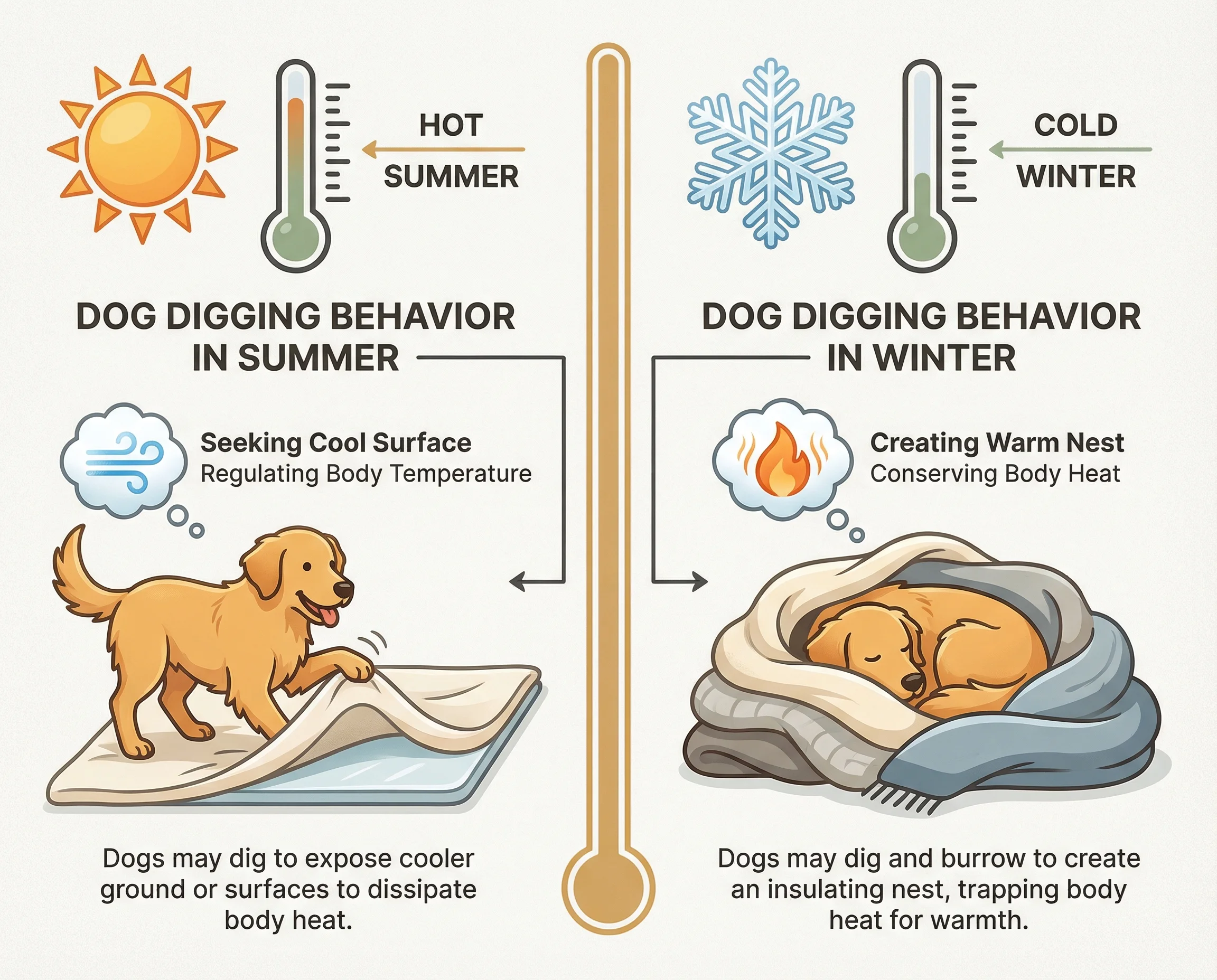
Temperature regulation: Digging removes the sun-warmed surface layer of soil to reach cooler earth underneath during hot weather. In cold conditions, digging creates a depression that traps body heat and provides insulation from frozen ground.
Comfort optimization: Scratching away rocks, twigs, and other uncomfortable debris creates a smoother sleeping surface. Even though your bed doesn't have rocks, your dog's instinct to "prepare" the sleeping area remains hardwired.
Safety and concealment: A shallow depression makes animals less visible to predators and provides slight protection from wind and weather.

Territorial Marking
Dogs have scent glands in their paw pads. When they scratch and dig at surfaces, they're depositing pheromones that mark the territory as "theirs."
This is why you might notice your dog digging more intensely on shared furniture or new bedding—they're claiming it as their own space. It's a form of scent-based communication that says, "This spot belongs to me."
In multi-dog households, you may observe dogs digging more frequently or intensely on the same sleeping areas, essentially "overwriting" each other's scent marks in an ongoing territorial conversation.
The 6 Main Reasons Dogs Dig on Beds and Couches
While evolutionary instinct provides the foundation for digging behavior, modern dogs dig for various specific reasons. Let's examine each one in detail.
1. Creating the Perfect Sleeping Nest
The most common reason dogs dig is simple: they're making their bed more comfortable.
Just as you might fluff your pillow or adjust your blanket before sleep, dogs use their paws to:
- Rearrange bedding materials into a more comfortable configuration
- Create a slight depression that cradles their body
- Adjust the "fluffiness" or firmness of soft surfaces
- Position blankets or cushions to better support their sleeping position
What to watch for: This type of digging typically happens immediately before the dog lies down. It lasts 5-30 seconds and ends once the dog settles. The dog appears calm and purposeful, not frantic or anxious.
Is it normal? Absolutely. This is healthy, instinctive behavior that helps your dog feel secure and comfortable. Unless they're damaging furniture or bedding, there's no need to discourage it.
2. Temperature Regulation
Dogs don't sweat like humans—they regulate temperature primarily through panting and by seeking cooler or warmer environments.
In warm weather or heated rooms: Dogs may dig at bedding to reach cooler layers underneath. You'll notice this behavior more frequently in summer or in dogs with thick coats. They might also dig to expose bare mattress or couch surfaces that feel cooler than blankets.
In cold weather: Some dogs dig to create a nest that traps body heat. They'll burrow into blankets, pile bedding around themselves, or create a depression that holds warmth close to their body.
Breed considerations:
- Northern breeds (Huskies, Malamutes) may dig more to reach cooler surfaces—they're built for cold climates and overheat easily
- Small or short-coated breeds (Chihuahuas, Greyhounds) may dig to create warm nests since they have less natural insulation
- Brachycephalic breeds (Bulldogs, Pugs) may dig more in warm weather due to their compromised breathing and difficulty regulating temperature
If your dog digs excessively in warm weather and shows other signs of overheating (excessive panting, drooling, lethargy), ensure they have access to cool resting spots and plenty of water. Consider orthopedic cooling beds for breeds prone to overheating.
3. Anxiety and Stress Relief
Digging can be a self-soothing behavior when dogs feel anxious, stressed, or uncertain.
Common anxiety triggers that lead to digging:
- Being left alone (separation anxiety)
- Loud noises (thunderstorms, fireworks, construction)
- Changes in routine or environment
- New people or pets in the home
- Pre-bedtime anxiety or restlessness
How to distinguish anxiety-related digging: Unlike comfort-seeking digging, anxiety digging is often:
- More intense and frantic
- Accompanied by other stress signals (panting, pacing, whining, yawning)
- Repetitive without the dog settling down afterward
- Triggered by specific stressors rather than occurring routinely before rest
What to do: If you suspect anxiety is driving the behavior, address the underlying stress rather than the digging itself. Consider:
- Creating a predictable daily routine
- Providing a designated "safe space" with familiar scents
- Using calming aids (pheromone diffusers, anxiety wraps, calming supplements)
- Consulting a veterinary behaviorist for persistent anxiety issues
4. Excess Energy and Boredom
Sometimes digging on furniture is simply a way for an under-stimulated dog to burn energy or entertain themselves.
This is especially common in:
- High-energy breeds (Border Collies, Australian Shepherds, Terriers)
- Young dogs and puppies with abundant energy
- Dogs who haven't received adequate physical or mental exercise
- Intelligent breeds that need regular mental stimulation
Signs it's boredom-related:
- Digging happens throughout the day, not just before rest
- It's accompanied by other bored behaviors (pacing, destructive chewing, attention-seeking)
- The dog doesn't seem to have a clear "goal" and may move from one digging spot to another
- Behavior decreases significantly after exercise or play
The solution: Increase physical exercise, mental enrichment, and structured activities:
- Add an extra walk or play session daily
- Use puzzle toys and food-dispensing toys
- Teach new tricks or commands to provide mental stimulation
- Arrange playdates with other dogs for social enrichment

5. Pregnancy and Nesting Instinct
Female dogs, especially when pregnant or experiencing a false pregnancy, may dig intensively as part of nesting behavior.
True pregnancy nesting: In the final weeks before giving birth, pregnant dogs instinctively create a "nest" for their puppies. This involves:
- Extensive digging and scratching at bedding
- Rearranging blankets and cushions into a specific configuration
- Seeking enclosed or secluded spaces
- Becoming protective of their nesting area
False pregnancy (pseudopregnancy): Some unspayed female dogs experience hormonal changes that mimic pregnancy, leading to nesting behaviors even when they're not actually pregnant. This can occur 6-12 weeks after a heat cycle and may include:
- Nesting and digging behavior
- Mothering toys or objects
- Lactation in some cases
- Restlessness and anxiety
What to do: Provide a designated nesting area with soft, washable bedding if your dog is pregnant. For false pregnancies, the behavior typically resolves on its own within 2-3 weeks. If symptoms are severe or persistent, consult your veterinarian about hormonal treatments or spaying.
6. Hiding Food or Treasured Objects
Some dogs dig at bedding and furniture as an attempt to "bury" valued items like treats, bones, or favorite toys.
Why dogs hide food: This behavior stems from the survival instinct to cache food for later consumption. Wild canids would bury surplus food to protect it from scavengers and save it for times when prey was scarce.
Modern manifestation: Your dog might:
- Dig at cushions and try to push a treat underneath
- Use their nose to "cover" a bone with imaginary dirt after placing it on the couch
- Frantically dig at blankets when holding a high-value chew in their mouth
- Return repeatedly to "check" on hidden items
What to watch for: This is normal, harmless behavior unless your dog becomes possessive or aggressive about hidden resources. If they're hiding food excessively, it might indicate:
- They're being fed too infrequently (consider more frequent, smaller meals)
- Insecurity around food resources (common in dogs from shelters or hoarding situations)
- Competition with other pets in the household
When Digging Becomes Problematic
While most digging is completely normal, certain patterns suggest the behavior has become excessive or indicates an underlying problem.
Signs of Problematic Digging
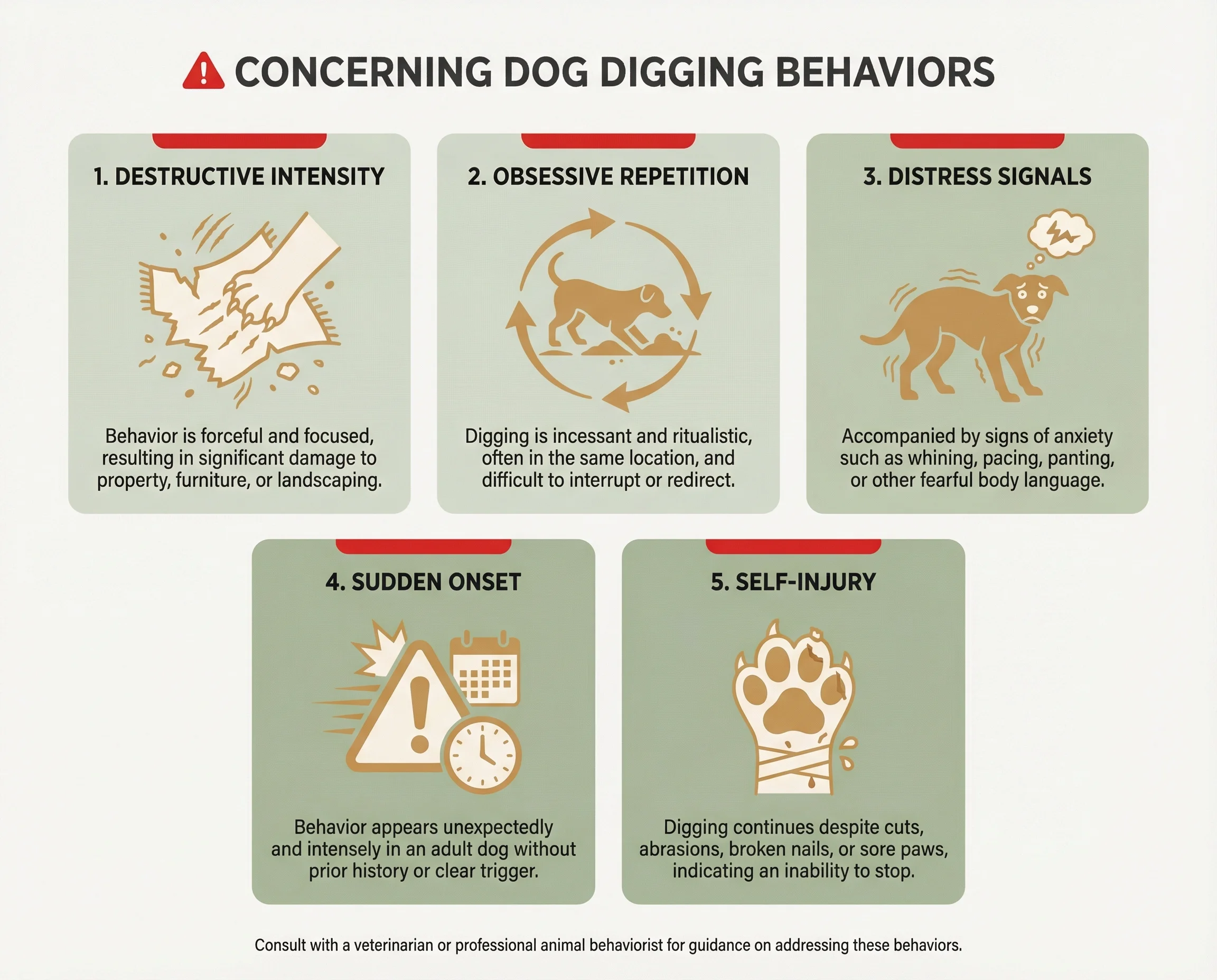
🚩 Red flags to watch for:
Destructive intensity: The dog is damaging furniture, tearing fabric, or breaking through cushions. This goes beyond rearranging and becomes genuinely destructive.
Obsessive repetition: The dog digs for extended periods (10+ minutes) without settling, or returns to dig repeatedly even after lying down.
Accompanying distress: Digging is paired with obvious anxiety signals like trembling, excessive drooling, panting when not hot, or vocalizations.
Sudden onset in older dogs: A previously non-digging dog suddenly develops intense digging behavior, which could indicate pain, cognitive decline, or medical issues.
Self-injury: The dog digs so intensely they develop sore or bleeding paw pads.
Disrupted sleep: The constant digging and rearranging prevents the dog (or you) from getting adequate rest.
Potential Underlying Issues
Cognitive dysfunction (canine dementia): Senior dogs with cognitive decline may develop repetitive behaviors including obsessive digging. Other signs include disorientation, changes in sleep-wake cycles, and forgetting learned behaviors.
Pain or discomfort: Dogs with arthritis or other painful conditions may dig excessively trying to find a comfortable position. They can't tell us they hurt, so they keep adjusting and readjusting their sleeping spot.
Skin allergies or irritation: Sometimes what looks like digging is actually the dog trying to scratch an itch. If your dog is also licking paws, scratching, or showing signs of skin irritation, allergies might be the culprit.
Obsessive-compulsive disorder (OCD): In rare cases, dogs can develop true OCD that manifests as compulsive digging. This typically requires behavioral intervention and sometimes medication.
Separation anxiety: Intense, destructive digging that occurs specifically when you leave can indicate separation anxiety—a serious condition that needs professional behavioral help.
If your dog's digging behavior suddenly changes or intensifies, or if you notice any of the red flags above, schedule a veterinary examination. Medical issues should always be ruled out before assuming behavior is purely psychological or habitual.
How to Manage Excessive Digging Behavior
If your dog's digging has become disruptive or destructive, these strategies can help redirect and reduce the behavior.
1. Provide Appropriate Outlets
Give your dog a designated digging space:
- Provide a dog bed with loose blankets they're allowed to rearrange
- Create a "dig box" filled with soft materials for dogs who enjoy intense digging
- Designate specific furniture as "dog-friendly" where digging is permitted
Why this works: You're not eliminating the instinct—you're channeling it into acceptable outlets. Dogs understand boundaries when consistently reinforced.
2. Address the Root Cause
For temperature regulation:
- Provide cooling mats or elevated beds in warm weather
- Offer cozy, insulated beds in cold weather
- Ensure room temperature is comfortable for your dog's breed and coat type
For anxiety:
- Identify and minimize anxiety triggers when possible
- Create a consistent daily routine
- Use calming aids (compression wraps, pheromone diffusers, calming music)
- Consider professional behavioral help for severe anxiety
For boredom:
- Increase daily exercise appropriate for your dog's age and breed
- Add mental enrichment through training, puzzle toys, and nose work games
- Provide social interaction with people or other dogs
- Rotate toys to maintain novelty and interest
3. Optimize Their Sleeping Environment
Make their bed more appealing than your furniture:
Choose a dog bed that matches your dog's preferences:
- Orthopedic memory foam beds for dogs who dig to find comfortable positioning (especially seniors or large breeds)
- Bolster or donut beds for dogs who like to nest and feel enclosed
- Cooling beds for dogs who dig to reach cool surfaces
- Elevated beds for dogs who overheat easily
- Multiple texture options to let your dog choose their preference
Placement matters:
- Position beds in quiet, low-traffic areas where your dog feels secure
- Place beds away from heating vents, radiators, or cold drafts
- Provide multiple bed options in different locations
- Keep beds in areas where the family spends time (most dogs want to be near their people)
4. Positive Reinforcement Training
Redirect the behavior using reward-based training:
Step 1: When you see your dog preparing to dig on furniture, interrupt gently with a verbal cue ("Off" or "Go to your bed").
Step 2: Immediately guide them to their designated dog bed.
Step 3: When they settle on their own bed—even if they dig there—offer praise and a high-value treat.
Step 4: Repeat consistently. Every time they choose their bed over your furniture, reward them.
Why this works: You're teaching an alternative behavior through positive association. Your dog learns: "My bed = treats and praise. Their bed = redirection without reward." Over time, they'll naturally choose the option that brings rewards.
Important: Never punish digging harshly. Punishment can increase anxiety, which often makes digging worse. Focus on rewarding what you want rather than punishing what you don't want.
5. Protect Your Furniture
While working on behavior modification, protect your furniture from damage:
Physical barriers:
- Use washable furniture covers on couches and chairs
- Place deterrent mats (textured surfaces dogs dislike) on furniture when you're not home
- Block access to bedrooms or other rooms with tempting furniture
Deterrent sprays:
- Use pet-safe bitter sprays on furniture edges (test on inconspicuous areas first)
- Avoid punishment-based deterrents that cause fear or anxiety
Make furniture less appealing:
- Remove soft blankets and pillows that encourage nesting when you're away
- Reduce the "fluffiness" factor that triggers digging instincts
Understanding Breed-Specific Tendencies
Certain breeds have stronger digging instincts due to their original purposes and genetics.
Terrier breeds (Jack Russell, Cairn, Fox Terrier): Originally bred to dig into burrows to hunt vermin. They often have the most intense digging drives and may dig on furniture, floors, and yards with equal enthusiasm.
Dachshunds: Bred to pursue badgers into underground dens. Despite their small size, they have powerful digging instincts and strong front paws designed for excavation.
Siberian Huskies and Alaskan Malamutes: Arctic breeds dig to create cool resting spots in snow or to reach cooler ground layers. They often dig on beds and furniture to regulate temperature.
Beagles and Scent Hounds: While primarily scent-driven, these breeds were bred to work close to the ground and may dig when following scent trails or creating comfortable resting spots.
Herding breeds (Border Collies, Australian Shepherds): High-energy, intelligent breeds that may dig out of boredom or excess energy when not adequately stimulated.
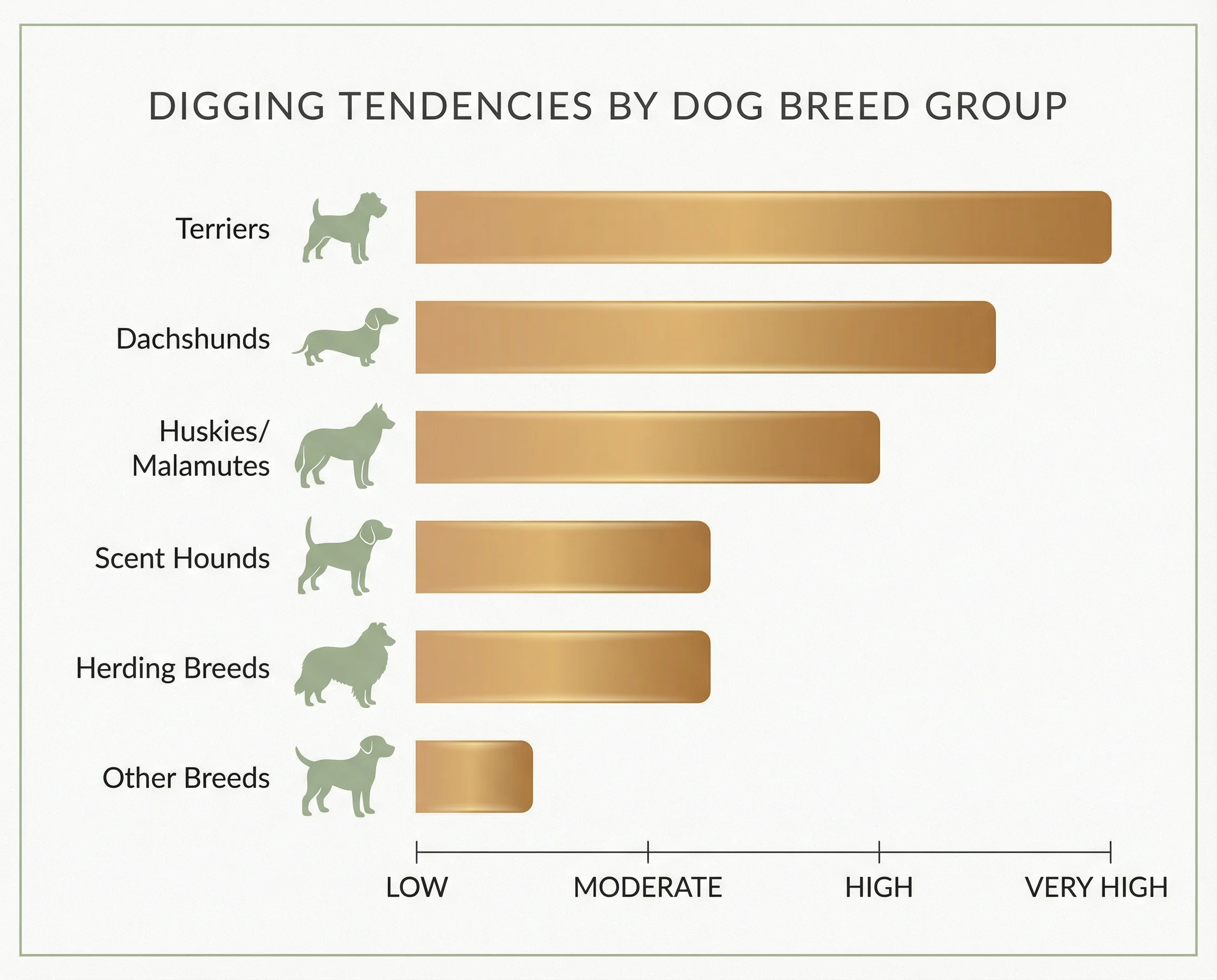
Understanding your dog's breed-specific traits helps set realistic expectations. A terrier may never completely stop digging—it's hardwired into their genetics. The goal is management and providing appropriate outlets, not elimination of the behavior.
Final Thoughts
Your dog isn't digging on your bed or couch to annoy you. They're following ancient instincts, seeking comfort, regulating their temperature, or managing their emotional state.
The key takeaways:
-
Digging is natural: It's a deeply ingrained canine behavior with evolutionary roots. Most digging is completely normal and harmless.
-
Context matters: Pay attention to when, where, and how your dog digs. Patterns reveal whether it's comfort-seeking, anxiety-driven, or something else.
-
Address root causes: Rather than simply trying to stop the behavior, understand why it's happening. Temperature issues, anxiety, boredom, and inadequate bedding can all be addressed.
-
Provide alternatives: Give your dog appropriate outlets for their digging instinct—especially a comfortable bed they can rearrange to their heart's content.
-
Watch for warning signs: Sudden changes, destructive intensity, or signs of distress warrant veterinary attention to rule out medical issues.
The most effective approach combines understanding (recognizing why the behavior happens), management (protecting furniture and providing alternatives), and patience (accepting that instinctive behaviors take time to redirect).
Every dog is an individual with unique preferences, breed characteristics, and personal quirks. What works for one dog might not work for another. The key is observing your specific dog, understanding their needs, and creating an environment where they can express natural behaviors in ways that work for your household.
Most importantly, remember that your dog's digging behavior is communication. They're telling you something about their needs—whether that's "I'm too hot," "I'm anxious," "I need more exercise," or simply "I want my bed to feel just right." Listen to what they're telling you, and respond with compassion and understanding.